twistin economics

twistin economics

Wednesday, September 18, 2013

Concept Map/Final Journal before GR A

Folks,

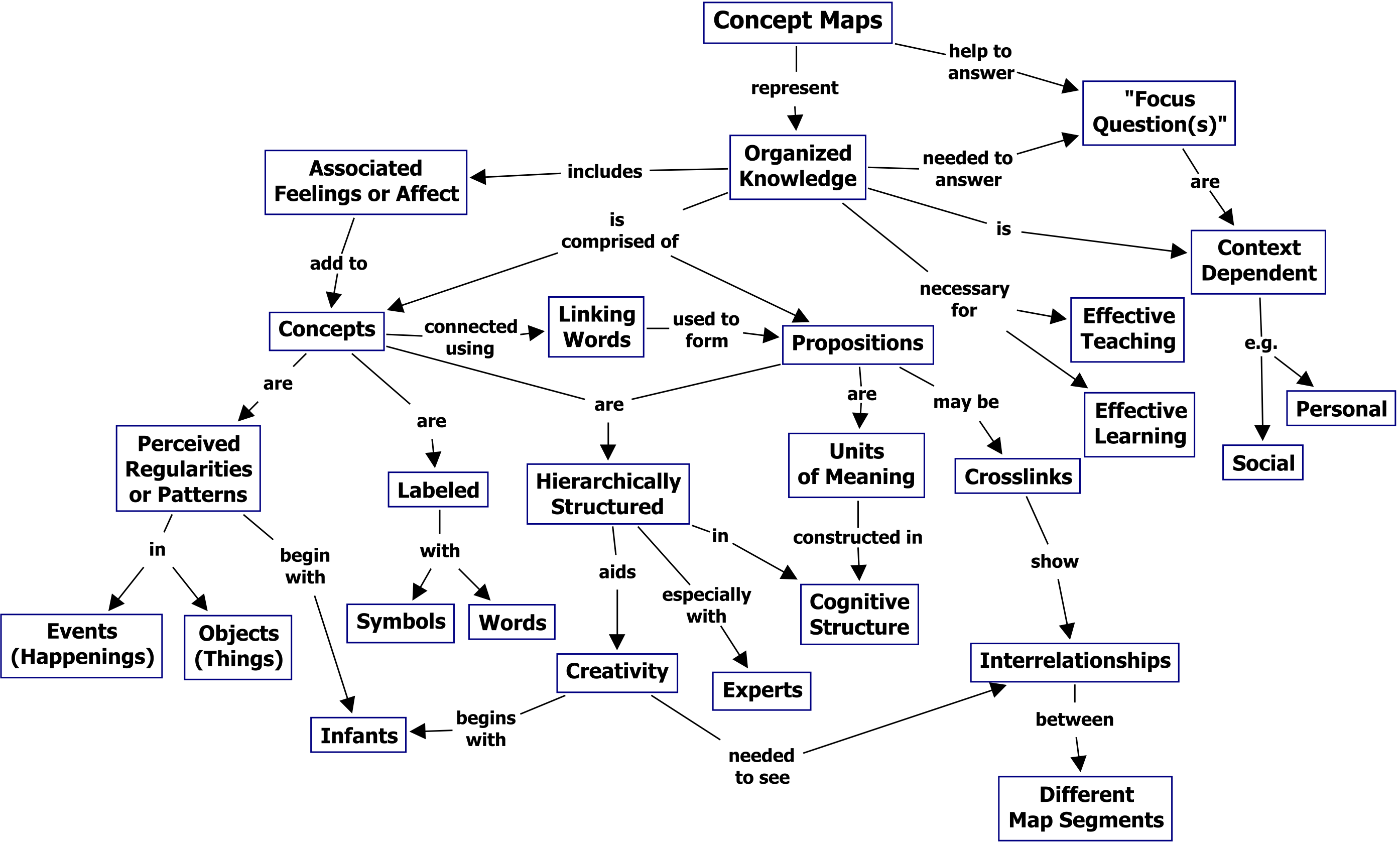
I want you to look at what we've covered and create a "concept map."

(ie http://cmap.ihmc.us/publications/researchpapers/theorycmaps/Fig1CmapAboutCmaps-large.png)

Ideally at the "center" or "top" you'd start with the idea economics. From there you should focus on the definition and principles and then move to specific things we might have covered and how they might relate to the principles and to each other. Hopefully this is an exercise in connecting all the disparate lessons together. I'd also desire that you include objectives in places where you feel them to be relevant. If you're not sure about objectives look at the objectives linked to reading portion in your syllabus or on the K drive (K:\DF\DFEG\Economics\Econ201\Fall 2013\Balser).


If it helps think about this question: How are the seven principles and the definition of economics related to prices? why isn't economics just about money?

Thursday, September 12, 2013

Post Lesson 12/Pre Lesson 13

Man this semester is flying by! Yesterday we discussed different ways in which prices "fail" and we talked about why prices fail.

Recall that prices coordinate information. Specifically prices, when working properly, will accurately reflect without any work on our part the relative scarcity of different items so that we can accurately weigh the costs/benefits and tradeoffs of different decisions. In cases like monopoly it's not the high prices that are really the problem...the problem is that the high prices reflect a scarcity that does not truly exist thus creating an inefficiency (we have too few transactions). This is the same reason that price controls are so bad...they also create an artificial surplus, at least in the case of price ceilings that we have talked about.

All of these cases are failures from an economists point of view because scarce resources with alternative uses are being kept from being used or produced how they ought to be.

On lesson 11 we talked about asymetric information as one example and yesterday we talked about monopolies. Other  market failures similarly result in prices that don't acurately reflect the information they ought to and like the used-car case there are often various potential solutions. We need to be aware of how different solutions will actually get at the root problem. So we could set a price ceiling to keep a monopolist from "overcharging" but what effect might a price ceiling have on a business' production?

As for monopolies, it is hard to have a monopoly if:
  • consumers can turn to other products if you prices are too high (there are close substitutes)
    • for example it would be really hard to have a monopoly on apples because even if you owned all the apple farms in the world you still have to compete with oranges
    • another way of saying this is that the product has to be unique in quality (think water)
  • consumers can turn to other firms that is you can't have a monopoly if there is more than one company
  • a prospector could start up a new firm in your industry relatively cheaply and easily
    • the easier it is for someone to enter the business the harder it will be to raise prices so that you can raise profits.
    • so if you are a corn "monopolist" and raise prices so that you have large profits what will happen? probably, wheat farmers will start planting corn since it's cheap to switch so that quantity supplied will again increase and prices will decrease thus leaving the monopolist right back where he/she started.
    • on the other hand if you are a monopolist of electricity and you raise prices there is a large cost for someone else to come into the market. Just to get started a new company would have to lay miles of utility lines. This is an expensive endeavor! You'd have to believe that your profit margin would be extremely large and large for a long time to even attempt to challenge the current provider of electricity.
With all of this in mind I want you to read BE 156-164 and either the section on regulatory commissions, 164-170, or anti-trust laws, 170-182. For your journal respond to this scenario:

Two cadets conspire and cheat on a test and their teacher brings them up for an honor hit. Each cadet knows that if they both don't talk they'll will fail the class but get no honor probation. However, if one of them talks, the one who talks will have to redo the assignment while the other will be disenrolled. If both talk they'll each redo the assignment but receive honor probation. What is the best outcome for the cadets? What do you think will happen?

Init Refl Paper II

Again I have some general comments on the initial papers. You need to talk to me if you are confused...I can't read minds:

  1. In addition to the current rules you can write about a current intervention which you think is good and explain why
  2. Made up situations can't be vague or far-fetched. You need to explain why they are realistic and what the root cause of the issue (a monopoly) for example is.
  3. About prices: what does it mean for a market to be inefficient? Why point to higher prices? Are higher prices neccesarily bad? what should prices communicate (or what knowledge are they communicating, think about the connection to the definition of econ)?
  4. You ought to be referencing scarcity...are things under your situation more or less scarce than we'd like....why?
I also don't need descriptoins of free-markets or for you to tell me that free markets are usually efficient. That is fluff, it's unneccesary and it obscures the things you ought to be focused on. Here is an example structure, it could just as well be written in paragraphs or in bullet format:
  • Claim: Market X is inefficient
    • Premise 1: Efficiency exists when A occurs
    • Premise 2: Because of B, A is not occuring and/or is distorted from reality
      • explanation of why the distortion is occuring
    • Solution: We want A to occur, We might intervene by doing C or D.
      • C will cause _____________changes. (how will it address the root problem or issue of incentives? are there costs? are the costs greater than the benefits?)
      • D will cause ______________ changes (same as above)

Monday, September 9, 2013

Post Lesson 11/Pre Lesson 12

Folks for next time read BE 128-134 and 139-143. Also complete the worksheet on the K drive.

I thought today was a good day and I have us down as a check.

However, as a result of some issues today, the next time I correct someone on a computer issue both the offender and any neighbors will be penalized severly and so will the class.

Takeaways from today:
  • All systems, capitalism included, have costs. In particular for capitalism to function properly means that losers will exist.
  • It is important to first identify how and/or why prices are or are not working.
  • If prices are failing to do their job it is not enough to merely say there ought to be intervention. Instead you need to evaluate how different alternative solutions will change costs, benefits, incentives and how such changes might affect equilibrium solutions and efficiency.
See you wednesday.

Thursday, September 5, 2013

Post Lesson 10/Pre Lesson 11

Folks,

Read BE 89-91 and 112-117 and journal on this question: why would i pay more to buy a used car (the same make, model, miles etc) from a dealer than from an individual?

Don't forget your inital reflection paper is due next time.

Today's lesson was good though we didn't get as far as desired. Hopefully you all understand shifts and changes in price a bit better than before and I hope we understand the role of prices better. I gave today a check plus.
  • Address the question that is asked. If you don't know what the question is your first step should be to clarify.
  • Think about the incentives to all parties involved. think about how their actions always in the best light. In other words try to assume first that someone is doing something out of a desire to help and then explain why incentives result in a failure of that to happen.
  • Premises matter to the incentives that you think are in place and the outcome you think will occur.
    • Problematic premises (doing or believing X is bigotted) can prevent a discussion or dialogue alltogether.
    • Nuance is important
  • Prices convey information. If a government dictates prices then they are attempting to centralize all knowledge/information.
  • There are three basic ways that prices change which we have talked about:
    • Shifts in supply
    • Shifts in demand
    • artificial price controls (often via gov't intervention)
    • each will have different effects on incentives, equilibrium and efficiency
  • Prices and Profits/Losses are similar in that they convey information. Profits/losses tell owners/investors whether one should or should not stay in business or if they need to get better/more efficient at what they are doing. More to come next time
  • Next time we'll focus on the value on profits/losses and start in on questions about when prices fail and what the best response is to such failures.

Wednesday, September 4, 2013

Reflection Paper II

Detail an instance where free-markets fail to produce an efficient outcome and explain why. Explain why government intervention will create greater efficiency.

(Hint: on a deep level you should be thinking about when/how prices work AND whether the alternative structure to prices, government intervention, would provide any better incentives for efficient allocation. What is the cost-benefit and incentives to each solution?)

Note: you are free to invent a situation of your choosing it does not have to be real-world.

Tuesday, September 3, 2013

Post Lesson 9/Pre Lesson 10

Post Lesson 8 Continued:
  • A shortage or surplus can signal that prices aren't where they ought to be and can tell a supplier that they need to produce more/less and raise/lower prices to cover their marginal cost of producing the next unit. This is like the SUBARU example. Increased prices can actually be good because they encourage suppliers to provide more of the product you desire.
    • If the above is true it should be true for any situation. Messing with prices (lowering them) is not the right way to get goods (that are perhaps desperately needed) to the area that needs them. Despite the rightful desire to care for the poor, failing to encourage business by denying them the incentives (higher prices) to move products to their best use (area after hurricane) will only lead to further shortages and other issues.

For next time: Read BE 95-98 & one section from 98-112. I also want you to reflect on a very basic question in your journals: what are the things that can cause a change in price? what are the effects on demand? on supply? what do the different reasons for the changes in prices mean for you?

Today we focused exclusively on our quiz as a review of Block A.I specifically focusing on the role of prices in the economy and how supply and demand is useful to us in understanding the role of prices. Remember that prices too are affected by our principles...in fact prices merely reflect the reality of economics (the 7 principles) and CONVEY INFORMATION.

Your reading for today talked about the role of profits and losses, which we touched on briefly. Profits and losses like prices, convey information to businesses about their practices. We also discussed briefly the need for competition for prices to work...this is true also in applying economics to businesses and we'll begin to think, in this block, about what happens when prices (or profits/losses) fail to do their "job" and what choices we have to alleviate problems that might arise.

Your reading for next time discusses what happens when the world changes around a business and what happens if the business fails to adapt. We'll hopefully circle back on this and your previous reading!